Of course! Here is a comprehensive English mind map about the Spring Festival (Chinese New Year), structured with main branches and sub-branches for easy understanding.
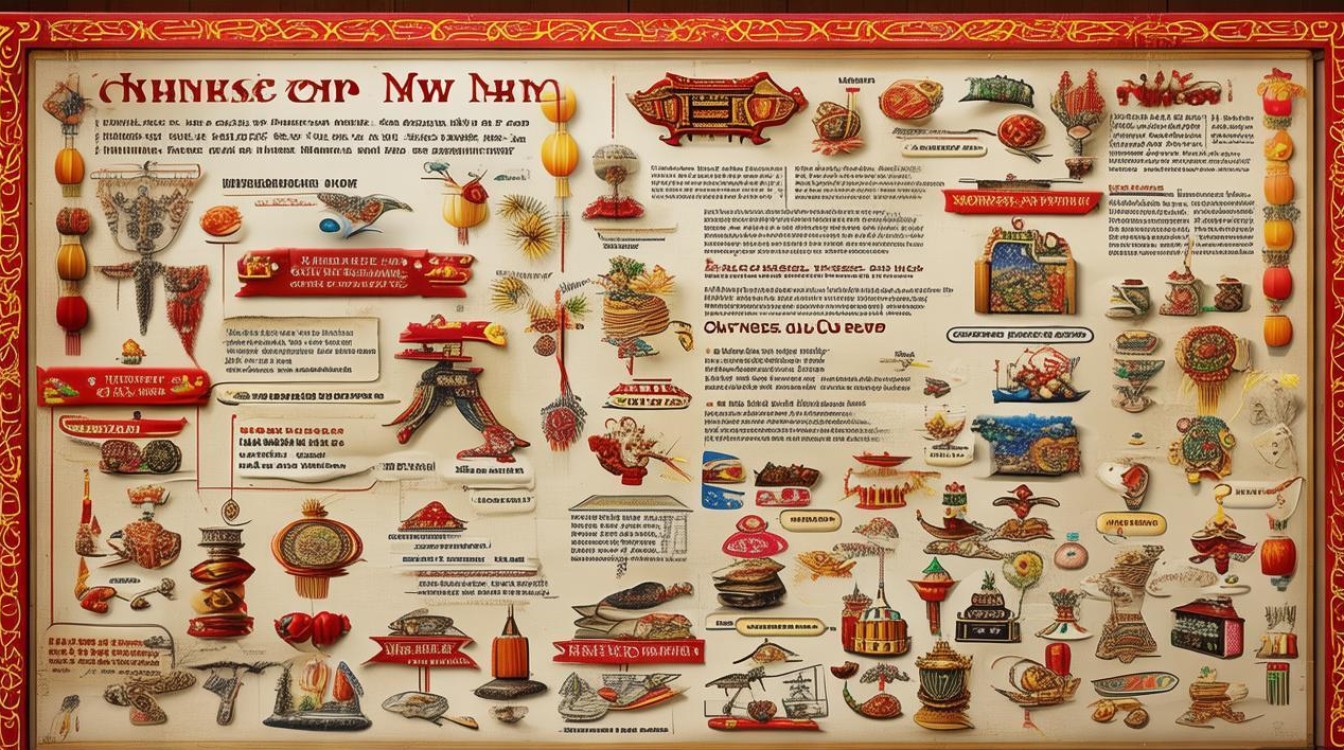
Spring Festival (Chinese New Year) Mind Map
Central Idea: Spring Festival (Chinese New Year) - The Most Important Traditional Chinese Holiday
Origin & Mythology (起源与神话)
- Legend of Nian (年兽传说)
- A beast named "Nian" would attack villages.
- People discovered Nian was afraid of three things:
- Loud Noises (响声): Firecrackers, drums.
- The Color Red (红色): Red decorations, clothes.
- Bright Lights (光亮): Lanterns, fires.
- Historical Roots (历史根源)
- Originated from ancient end-of-year harvest and sacrificial ceremonies.
- A time to honor ancestors and deities.
- Marks the end of the winter season and the beginning of spring.
Traditions & Customs (传统与习俗)
- Preparations (节前准备)
- Cleaning (大扫除): "Sweeping the dust" to clean the house and sweep away bad luck.
- Decoration (装饰):
- Red Couplets (春联): Poetic phrases on red paper, pasted on doorways.
- Paper Cuttings (剪纸): Intricate red paper designs for windows and walls.
- New Year Paintings (年画): Traditional art depicting auspicious scenes.
- Lanterns (灯笼): Hung to light the way for good fortune.
- Shopping (购物): Buying new clothes, gifts, and food. "New" for the "New Year."
- Haircut (理发): Getting a haircut before the New Year to start fresh.
- New Year's Eve (除夕 - Chuxi)
- Reunion Dinner (年夜饭): The most important family meal of the year.
- Staying Up Late (守岁): Staying awake past midnight to "guard the year" and welcome the new one.
- Giving Red Envelopes (发红包): Elders give money in red envelopes to children for good luck.
- Firecrackers (放鞭炮): Set off at midnight to scare away evil spirits (Nian).
- New Year's Day (正月初一)
- New Clothes (穿新衣): Wearing new, preferably red, clothes.
- Visiting Relatives (拜年): Paying calls on relatives and friends to exchange greetings.
- Wishing "Happy New Year" (拜年祝福): Saying auspicious phrases like "Gong Xi Fa Cai" (恭喜发财 - Wishing you prosperity).
- Forbidden Activities (禁忌):
- No sweeping or cleaning (to not sweep away good luck).
- No breaking things (to avoid inauspiciousness).
- No using sharp objects (to not cut off fortune).
- No negative words or arguments.
- Festival Period (节日期间)
- Lion & Dragon Dances (舞龙舞狮): Performances to bring good luck and chase away evil spirits.
- Temple Fairs (庙会): Outdoor fairs with food, games, and performances.
- Watching the Spring Festival Gala (看春晚): A major national TV watched by millions of families.
Food & Symbolism (食物与象征)
- Dumplings (饺子 - Jiaozi): Symbolize wealth and prosperity (their shape resembles ancient gold ingots).
- Spring Rolls (春卷 - Chunjuan): Symbolize wealth, as their shape resembles a gold bar.
- Fish (鱼 - Yu): Served whole, symbolizing a surplus or abundance for the coming year (年年有余 - "may you have more than you need year after year").
- Nian Gao (年糕 - New Year Cake): Symbolizes progress and higher income/position every year (年年高升 - "higher year by year").
- Tangyuan (汤圆 - Sweet Rice Balls): Eaten during the Lantern Festival, symbolizing family togetherness and unity.
- Tangerines & Oranges (桔子/橙子 - Juzi/Chengzi): Their names sound like "luck" (吉 - ji) and "success" (成 - cheng), so they are popular gifts.
Key Dates & Activities (关键日期与活动)
- Chuxi (除夕): New Year's Eve. Focus: Reunion Dinner.
- Chunjie (春节): New Year's Day (Day 1). Focus: Family visits, greetings.
- Chu'er (初二): "Wife's Day." A married daughter visits her parents' home.
- Chusan (初三): "Mouse Wedding Day." People go to bed early to let mice get married.
- Chuwu (初五): "God of Wealth's Birthday." People set off firecrackers to welcome the God of Wealth.
- Yuanxiao Jie (元宵节): Lantern Festival (Day 15). Focus: Eating tangyuan, watching lanterns, solving riddles.
Modern Celebrations (现代庆祝方式)
- Travel Rush (春运 - Chunyun): The world's largest annual human migration as people travel home for the reunion.
- Digital Red Envelopes (电子红包): Sending money via apps like WeChat.
- Social Media & E-cards (社交媒体与电子贺卡): Sending greetings online.
- Shopping Spree (购物狂潮): Major sales in malls and on e-commerce platforms (e.g., Taobao, Tmall).
- Global Celebrations (全球庆祝): Parades and festivals in Chinatowns worldwide (e.g., in London, New York, Sydney).
Symbolic Colors & Meanings (象征性颜色与寓意)
- Red (红色): The most important color. Symbolizes good fortune, joy, happiness, and success. Used in decorations, clothing, and envelopes.
- Gold/Yellow (金色/黄色): Symbolizes wealth, prosperity, and power. Often used with red.
- White (白色): Associated with death and mourning; generally avoided during the New Year.
- Black (黑色): Associated with darkness and bad luck; generally avoided.