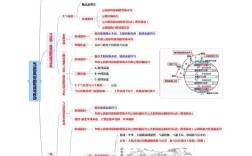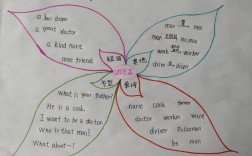
Characters (角色), Themes (主题), 和 Key Symbols & Quotes (关键象征与名言),每个部分都有详细的分支。
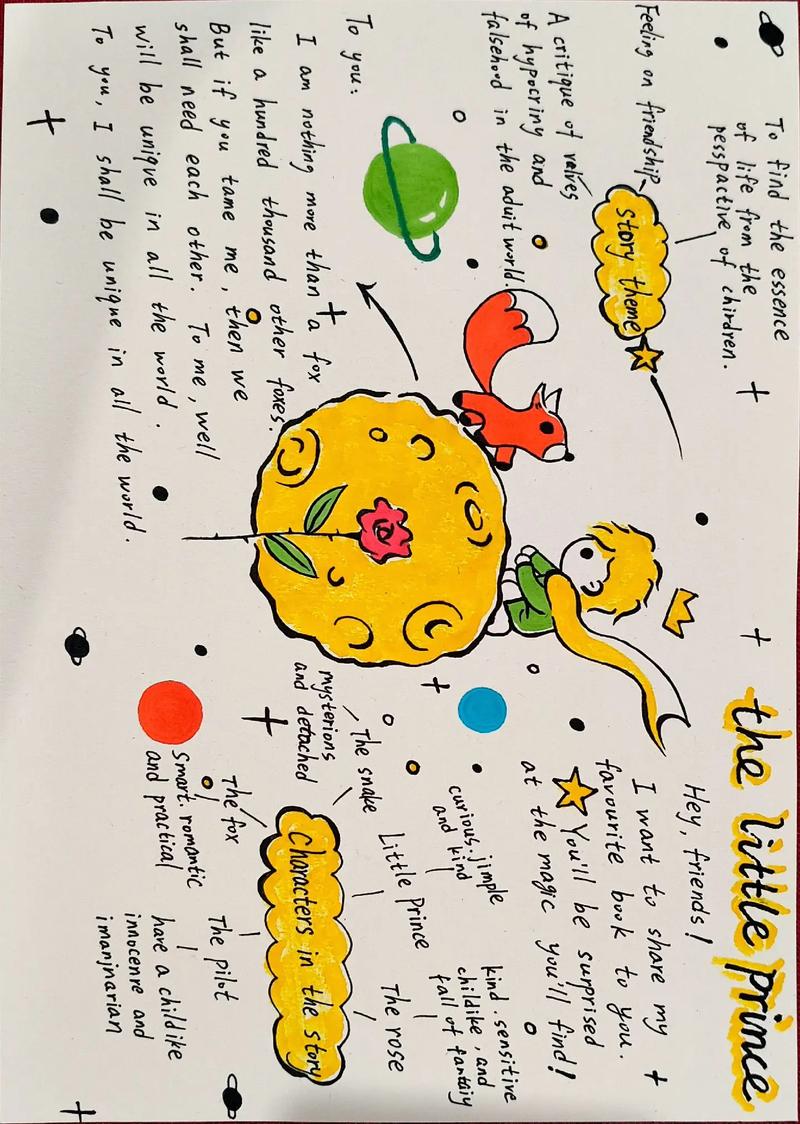
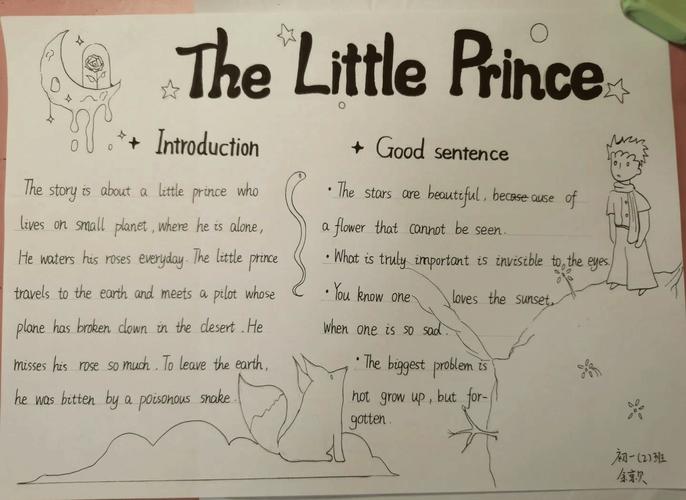
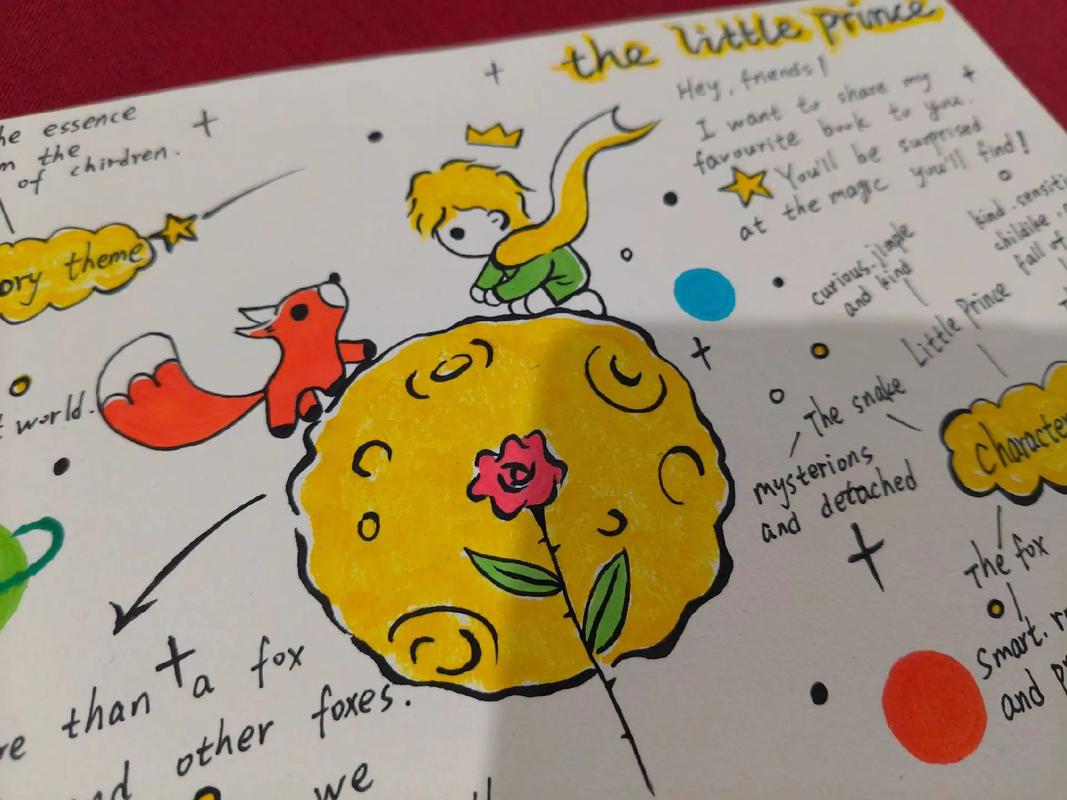
The Little Prince: English Mind Map
Characters (角色)
This branch focuses on the main and minor characters in the story, their characteristics, and their significance.
-
The Little Prince (小王子)
- Description: A young, curious, and innocent boy who leaves his tiny asteroid.
- Key Traits: Inquisitive, wise, loyal, values friendship and love over superficial things.
- Quest: To understand the true meaning of life and love.
-
The Narrator / Pilot (飞行员 / 叙述者)
- Description: An adult who crashed his plane in the Sahara Desert.
- Key Traits: Lonely, open-minded, reconnects with his inner child through the Prince.
- Role: The bridge between the adult world and the Prince's world; the listener and recorder of the story.
-
The Rose (玫瑰)
 (图片来源网络,侵删)
- Description: A vain, fragile, and demanding flower on the Prince's planet (B-612).
- Key Traits: Beautiful, proud, has "four thorns" for protection, but is also lonely.
- Significance: Represents love, responsibility, and the difficulties of relationships. The Prince's love for her is what compels him to leave and travel.
-
The Fox (狐狸)
- Description: A wise fox who teaches the Prince the most important lesson.
- Key Traits: Patient, insightful, understands the secrets of life.
- Lesson: "L'essentiel est invisible pour les yeux." (What is essential is invisible to the eye). Teaches the Prince about taming (建立联结) and responsibility (责任).
-
The Snake (蛇)
- Description: A mysterious, powerful, and silent snake who can solve all riddles.
- Key Traits: Symbolic, speaks in riddles, promises to help the Prince return to his planet.
- Symbolism: Represents death, transformation, and the unknown. Its bite can "send one back to the place from which he came."
-
The King (国王)
- Description: The ruler of the first asteroid the Prince visits.
- Key Traits: Vain, obsessed with power, but only rules over things that obey him (e.g., the sunset).
- Lesson: A critique of absurd authority and the loneliness of power.
-
The Conceited Man (爱虚荣的人)
 (图片来源网络,侵删)
- Description: The second character the Prince meets.
- Key Traits: Needs admiration above all else, sees the Prince as his admirer.
- Lesson: Represents the adult's need for approval and emptiness of ego.
-
The Drunkard (酒鬼)
- Description: The third character.
- Key Traits: Drinks to forget the shame of drinking.
- Lesson: Symbolizes the absurdity and vicious cycle of escapism and addiction.
-
The Businessman (商人)
- Description: The fourth character, obsessed with owning and counting stars.
- Key Traits: Busy, materialistic, believes he "owns" the stars.
- Lesson: A critique of greed, materialism, and the meaningless pursuit of wealth.
-
The Lamplighter (点灯人)
- Description: The fifth character, blindly following orders on a planet that spins faster each minute.
- Key Traits: Dutiful, but his work becomes meaningless and exhausting.
- Lesson: Represents blind obedience to rules and the loss of purpose in a modern, fast-paced world.
-
The Geographer (地理学家)
- Description: The sixth character, who writes about "eternal" things like mountains and oceans.
- Key Traits: Knowledgeable but has never left his desk.
- Lesson: Critiques a form of knowledge that is detached from real experience and life.
Themes (主题)
This branch explores the central ideas and messages of the book.
-
The Importance of Seeing Clearly (用心去看)
- Quote: "And now here is my secret, a very simple secret: It is only with the heart that one can see rightly; what is essential is invisible to the eye."
- Meaning: True understanding comes from emotion and intuition, not just from what you see with your eyes.
-
Innocence vs. Experience (纯真与世故)
- The Prince: Represents childhood innocence, wonder, and an ability to see what's truly important.
- The Adults (Pilot, King, Businessman, etc.): Represent the "grown-up" world, which is often dull, materialistic, and focused on the wrong things.
-
Love and Responsibility (爱与责任)
- The Rose: The Prince's love for her is complex. He is responsible for her care, which is why he leaves—to learn more about the world and grow into a better person for her.
- The Fox: Introduces the concept of "taming"—creating unique bonds. This bond creates responsibility. "You become responsible, forever, for what you have tamed."
-
Friendship and Connection (友谊与联结)
- The friendship between the Prince and the Pilot is central. It helps the Pilot rediscover his own childhood.
- The friendship between the Prince and the Fox is transformative, teaching him the value of connection.
-
The Absurdity of the Adult World (成人世界的荒诞)
The Prince encounters a series of ridiculous adults whose preoccupations (power, vanity, money) seem pointless from a child's perspective. This highlights the absurdity of many adult values.
-
Loss and Grief (失去与悲伤)
- The story begins with the Pilot's sense of loss (his drawings as a child).
- It ends with the Pilot's grief over the Prince's departure, symbolized by the stars that now laugh. Loss is a natural part of life and love.
Key Symbols & Quotes (关键象征与名言)
This branch highlights the most famous symbols and powerful quotes from the book.
-
B-612 (小行星 B-612)
- Symbolism: The Prince's unique, personal world. It represents one's individuality, home, and inner self.
-
The Baobabs (猴面包树)
- Symbolism: Dangers that must be dealt with when they are small. Represents negative thoughts, problems, or bad habits that, if ignored, can take over and destroy one's world.
-
The Stars (星星)
- Symbolism: At the beginning, they are just points of light. By the end, they are special because they remind the Pilot of the Prince's laughter and friendship. They become a symbol of eternal love and memory.
-
The Desert (沙漠)
- Symbolism: A place of emptiness and isolation. It is where the Pilot and the Prince meet, forming a deep connection in a barren landscape. It can also symbolize the spiritual emptiness of modern life.
-
The Watering Can (喷壶)
- Symbolism: Represents care, nurturing, and the effort required to sustain love and life. The Prince uses it for his Rose.
-
Famous Quotes (名言警句)
- "All grown-ups were once children... but only few of them remember it."
(Meaning: A call to remember our own childhood innocence and wonder.)
- "It is the time you have wasted for your rose that makes your rose so important."
(Meaning: Value is created through time, effort, and love invested in something or someone.)
- "One sees clearly only with the heart. Anything essential is invisible to the eyes."
(Meaning: The core message of the book about true perception.)
- "What makes the desert beautiful is that somewhere it hides a well."
(Meaning: Hope and beauty can be found in the most desolate places.)
- "All grown-ups were once children... but only few of them remember it."
This mind map should provide a comprehensive overview of the novel's key elements in English. You can use it as a study guide, a discussion prompt, or a way to organize your thoughts before writing an essay.