英语数词思维导图
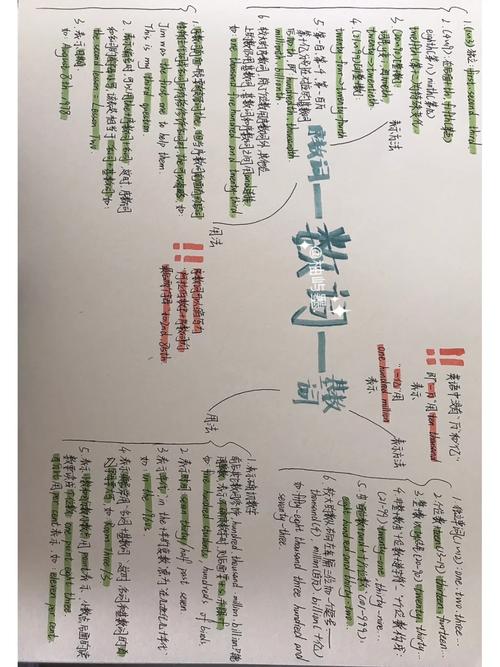
中心主题:英语数词
(图片来源网络,侵删)
一级分支 1: 数词的分类
-
二级分支 1.1: 基数词
- 定义: 表示数量“多少”的词。
- 核心功能: 回答 "How many?" 的问题。
- 三级分支 1.1.1: 基数词列表 (1-100+)
- 1-12: one, two, three, four, five, six, seven, eight, nine, ten, eleven, twelve (需特殊记忆)
- 13-19: thirteen, fourteen, fifteen, sixteen, seventeen, eighteen, nineteen (以
-teen重音在第二个音节) - 整十数 (20-90): twenty, thirty, forty, fifty, sixty, seventy, eighty, ninety (以
-ty重音在第一个音节) - 21-99: “几十-几”,中间用连字符 。 twenty-one, forty-five, ninety-nine
- 100-1,000,000+:
- 100: one hundred
- 1,000: one thousand
- 1,000,000: one million
- 1,000,000,000: one billion (美式) / one thousand million (英式)
- 三级分支 1.1.2: 基数词的用法
- 作主语: Two of us are from China.
- 作宾语: I need three.
- 作定语: There are five apples on the table.
- 作表语: The total is one hundred.
- 编号: Lesson Three / Room 501 (读作: five zero one)
- 年代表: in the 1990s (in the nineteen nineties)
-
二级分支 1.2: 序数词
- 定义: 表示顺序“第几”的词。
- 核心功能: 回答 "Which one?" 的问题,通常与定冠词
the连用。 - 三级分支 1.2.1: 序数词构成规则
- 1-3: 特殊变化
- one → first (1st)
- two → second (2nd)
- three → third (3rd)
- 4-19, 21-99: 基数词 +
th,注意拼写变化- five → fifth (5th) (ve 变 f)
- eight → eighth (8th) (只去 t)
- nine → ninth (9th) (e 变 i)
- twelve → twelfth (12th) (ve 变 f)
- twenty → twentieth (20th)
- twenty-one → twenty-first (21st)
- 整十数: 基数词词尾
y变i+eth- forty → fortieth (40th)
- fifty → fiftieth (50th)
- 1-3: 特殊变化
- 三级分支 1.2.2: 序数词的用法
- 排名: He won the first prize.
- 日期: It's on May 1st (May the first).
- 楼层: He lives on the third floor. (英式: ground floor, first floor; 美式: first floor, second floor)
- 世纪: the 21st century (the twenty-first century)
-
二级分支 1.3: 分数、小数和百分数
- 三级分支 1.3.1: 分数
- 构成:
分子 (基数词) + 分母 (序数词) + (s) - 规则:
- 分子为1,分母用序数词单数: 1/2 → one half / a half
- 分子大于1,分母用序数词复数: 2/3 → two thirds; 3/4 → three fourths / three quarters
- 特殊读法:
- 1/4 → one fourth / one quarter
- 3/4 → three fourths / three quarters
- 1/3 → one third
- 构成:
- 三级分支 1.3.2: 小数
- 构成:
整数部分 + point + 小数部分 - 读法: 小数点读作
point,小数部分逐个数字读。 - 示例:
- 5 → zero point five (或 point five)
- 14 → three point one four
- 25% → zero point two five percent
- 构成:
- 三级分支 1.3.3: 百分数
- 构成:
数字 + percent - 读法:
... percent - 示例: 50% → fifty percent; 100% → one hundred percent
- 构成:
- 三级分支 1.3.1: 分数
-
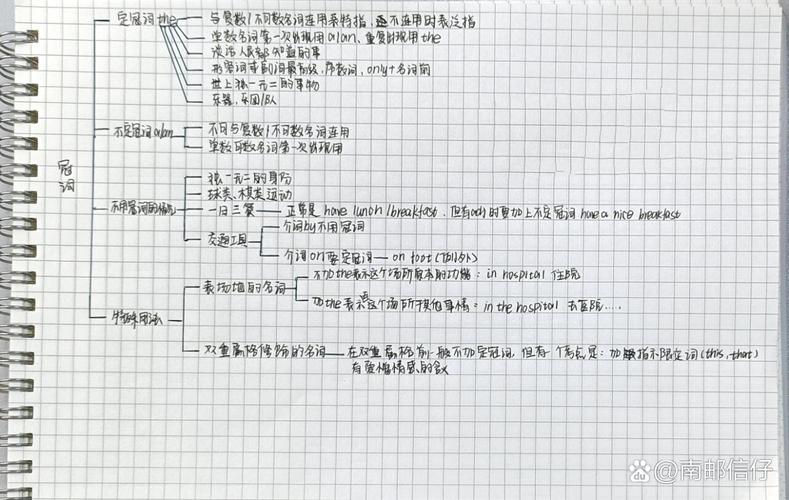
二级分支 1.4: 概数/约数词
 (图片来源网络,侵删)
- 定义: 表示大约、不确定数量的词。
- 核心词: about, around, some, several, a few, a little, many, much, more, most, a number of, a couple of, dozens of, a dozen, a score of, a hundred, etc.
一级分支 2: 数词的核心用法与要点
-
二级分支 2.1: 倍数表达
- 结构:
... times + as + adj./adv. + as ...- A is three times as big as B. (A是B的三倍大)
- 结构:
... times + 比较级 + than ...- A is three times bigger than B. (A比B大三倍,即A是B的四倍大 - 注意:此用法有争议,但常见)
- 结构:
... times + the size/length/width of ...- The new building is five times the size of the old one.
- 特殊:
twice/double(两倍);three times(三倍)
- 结构:
-
二级分支 2.2: 年龄表达
- 结构:
... years old/... years of age(正式)- He is ten years old.
- 结构:
at the age of + 数字- He learned to drive at the age of eighteen.
- 结构:
be + 数字(非正式,尤其在对话中)- "How old are you?" "I'm twenty."
- 结构:
-
二级分支 2.3: 数学符号与运算
- → plus / and (用于口语) / add
- → minus / subtract
- → times / multiplied by
- → divided by
- → equals / is / makes
- 示例: 2 + 3 = 5 → Two plus three equals five. / Two and three is five.
-
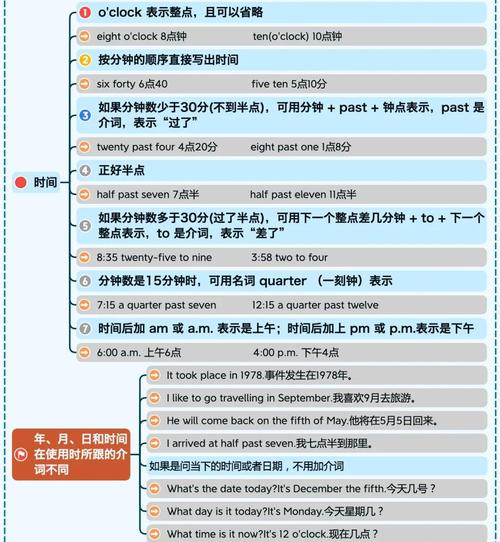
二级分支 2.4: 集合数词
 (图片来源网络,侵删)
- 定义: 表示一群、一组的人或物。
- 常见词组:
- a pair of shoes (一双鞋)
- a couple of days (几天,两三天)
- a dozen eggs (一打鸡蛋,12个)
- a score of people (二十个人)
- a hundred people (一百个人)
-
二级分支 2.5: 固定搭配与习语
- 数词 + 名词: a thousand thanks (万分感谢), one hundred percent (百分之百), two-faced (两面派)
- 习语:
- one in a million (百里挑一)
- at sixes and sevens (乱七八糟)
- on second thought(s) (再三考虑)
- first come, first served (先到先得)
- two can play at that game (你做初一,我做十五)
一级分支 3: 重要注意事项
-
二级分支 3.1: Hundred / Thousand / Million 的单复数
- 前面有具体数字: 用单数。
- two hundred students (两百名学生)
- 前面没有具体数字, 表示“成百上千”: 用复数 +
of。- hundreds of students (成百上千的学生)
- thousands of people (成千上万的人)
- millions of stars (数百万颗星星)
- 前面有具体数字: 用单数。
-
二级分支 3.2: Dozen / Score 的用法
- 前面有具体数字: 用单数。
- three dozen eggs (三打鸡蛋)
- 前面没有具体数字: 可以用单数或复数,但
dozens of更常见。- a dozen eggs / dozens of eggs
- scores of times (许多次)
- 前面有具体数字: 用单数。
-
二级分支 3.3: 序数词前 the 的使用
- 通常必须加
the: 指特定的顺序。- the first lesson (第一课,特指这第一课)
- 不加
the的情况:- 作名词: I got a first in my exam. (我考试得了个一等)
- 作副词: He came in first. (他得了第一名)
- 表示“再又一”: a second try (再一次尝试), a third time (又一次)
- 通常必须加
这张思维导图涵盖了英语数词的分类、核心用法和关键注意事项,学习时,建议先从基数词和序数词的构成和基本用法入手,然后逐步掌握倍数、年龄、分数等复杂表达,最后结合固定搭配和注意事项进行巩固,多读、多听、多用是掌握数词的最佳途径。